Concrete Sidewalk Building in Williston ND - a walk built to take the freeze and thaw
Cracked, heaved or flaking walk? We pack a solid base and pour early enough for the walk to dry out before deicer season.
- Licensed and fully insured.
- Free in-person estimates.
- Expect a reply within 1 business day.
What goes into building a concrete sidewalk that lasts in Williston?
Concrete sidewalk building in Williston means placing, finishing, curing and protecting a new walk so it holds up to years of freezing and thawing. We time the pour so the walk can dry out before the salt comes out.
Most people call us when the old walk has cracked, heaved or started to flake, or when there's no walk at all and the path to the door turns to mud every spring. The price moves with the length and width of the walk, how much old concrete has to come out, how much digging the base needs, any steps or turns, and the finish you pick. The schedule mostly turns on the weather, because I'd rather move a pour date than rush one. When I come out, I'll write up an estimate with the scope and the price for your walk.
How do you know your sidewalk needs replacing?
Cracks with raised edges
When one section sits higher than the next, the ground under it has usually moved, either from water that got under it and froze or from a base that was never packed. Every winter it lifts a little more, and that edge is what somebody catches a toe on.
Water pooling on the walk
Puddles that sit after rain, or melt that runs back toward the house, mean the walk has settled or was poured without the right fall. Standing water turns into ice patches and soaks into the concrete, which speeds up the damage.
Flaking or chipping on top
A rough, peeling surface usually means the top layer came out weak or took salt while it was too young. It often starts small, but once it spreads the walk gets rough underfoot and holds water every time it rains.
How we build a concrete sidewalk
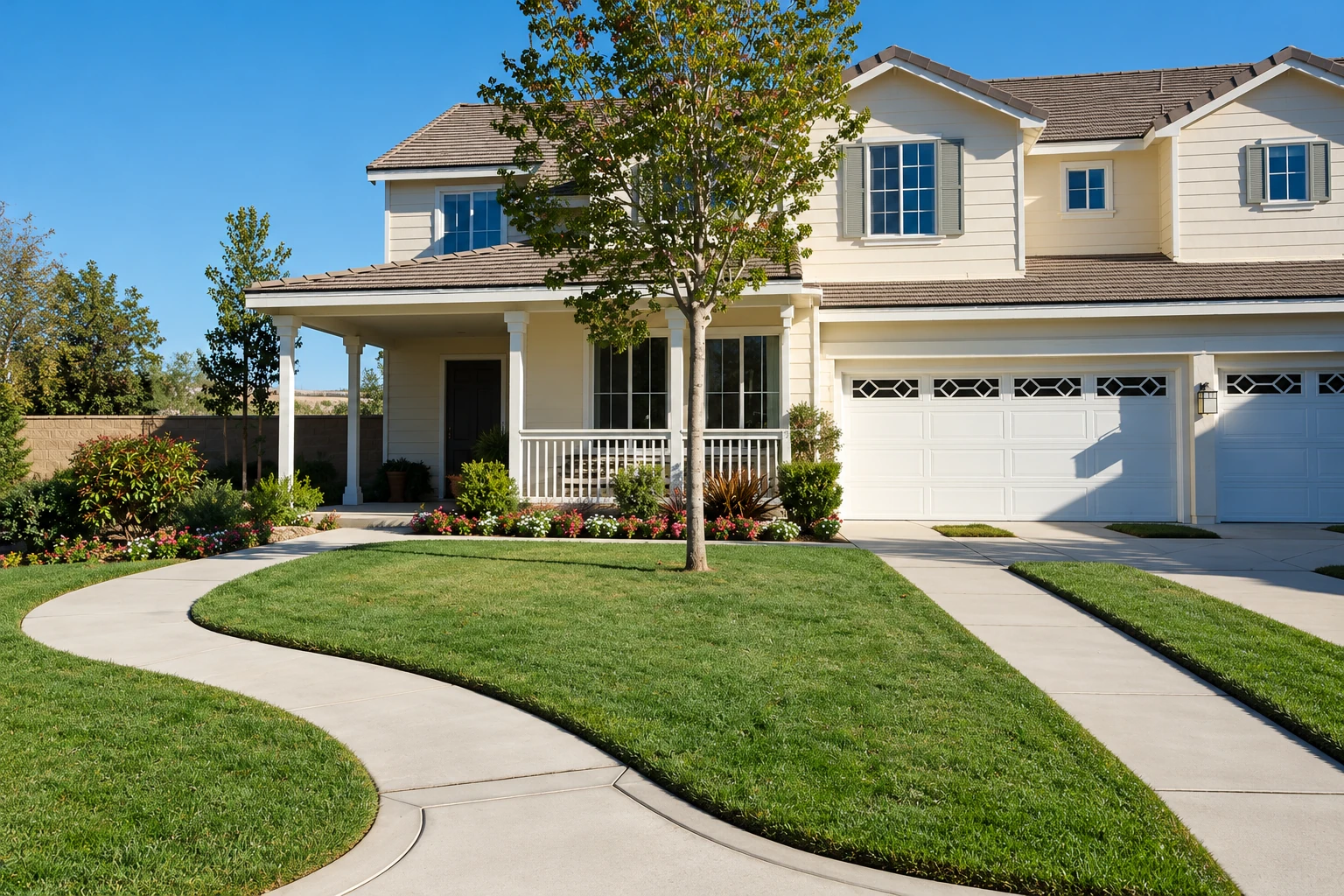
We break out and haul off the old walk if there is one, then dig down to firm ground instead of raking the dirt level, because a walk set on loose dirt settles right along with it. We pack the subgrade, the ground the slab sits on, and the gravel over it in layers, and I'll explain that prep to you before any concrete goes down. We set the forms so water runs off the walk and away from the house, add rebar, the steel bars that hold the slab together if it cracks, where the walk needs it, and pour early in the day, since midday heat can leave a weak, dusty top. Then we give it a broom finish, a light brushed texture that gives your boots grip when it's wet, and cut control joints, the grooves that tell the slab where to crack so it cracks in a straight line where nobody notices. The walk then cures, which is the wait while it gains strength before you use it, and we like to get walks in early enough in the year that they dry out before deicer season. If the budget's tight, I'll tell you to spend it on the base before the finish, because you can't see the base on day one but it's what decides whether the walk stays flat.
A sidewalk rarely stands on its own. If yours runs to the garage, we can look at the slab inside on the same visit as part of our garage floor concrete work, and if you want the front walk to be more than plain gray, our decorative concrete work adds color, pattern or a border.
Plain broom-finished walk
This suits most side and back walks, because it's the simplest to pour and the texture gives good grip in wet weather. It also leaves the most room in the budget for the base.
Replacing an old walk
This is for a walk that's cracked, heaved or flaking. We break it out and haul it off, then rebuild the base instead of pouring fresh concrete over the old trouble.
Front walk with color or a border
This is for the walk people see from the street. It costs more than a plain walk, and I'll still ask you to put the money into the base first.
Get a written sidewalk estimate from the owner
Send the form and expect a reply within one business day to set a time. I come out, measure the walk and write you a free estimate, with no pressure and no obligation.
(701) 401-8095- Based in
- Williston, ND 58801
- Hours
- Mon–Sun: 6 AM–11 PM
What happens after you call about a sidewalk?
Here's how a sidewalk job runs from your side, from the first call to the day you can walk on it.
- +01
Call or send the form
Call (701) 401-8095 or send the form, and we'll get back to you to set a time to look at the job. Having a rough length and width of the walk ready helps.
- +02
I measure and write it up
I come out, look at the ground and any old walk, ask what you use it for and write up the estimate. You get the scope, the price and anything I think will cause trouble, so there are no surprises when the truck shows up.
- +03
We set the pour date
Once you say go, we sort out the permit side with you. Then we pick a pour date with the weather in mind, and if the forecast turns, we move the date.
- +04
We pour, finish and clean up
My crew and I do the work ourselves, from digging out the base to cutting the joints and hauling off the scrap. After that the walk needs to cure, so you'll keep off it until it has gained its strength.
Why Williston homeowners call Williston Concrete for sidewalks
On a sidewalk, the part that matters most is the part you never see once it's done. If you'd like me to look at yours, start on the contact page or call (701) 401-8095.
The owner writes every estimate
I come out myself, look at the job, ask what the walk is for and write the estimate. If something about your site is going to cause trouble, you hear it from me then and not after the concrete arrives.
Licensed and fully insured contractor
Williston Concrete is licensed and fully insured. That way, if something goes wrong on your property while we're working, you're not the one covering it.
Back on concrete since 2023
I learned the trade on a concrete crew when I was young, did other work for a lot of years and came back to it in 2023. My crew and I still do the work ourselves, so the person who quoted the job is there when it's poured.
Pours planned around Williston winters
We plan each pour around the season instead of hoping for the best, and I'd rather move a date than rush one. A walk poured into a cold snap or a hot afternoon can look fine for a month and then start showing it.
Sidewalk work in Williston, from permits to winter wear
In Williston, sidewalk permits don't go through Building Safety, the office that handles building permits. They go through Engineering in the Public Works Department at 701-577-6368, and that's the office to ask whether your walk needs one. Before work starts, we figure out with you whether the city or the county covers your address, and we take care of the permit paperwork when the job calls for one.
The other local factor is winter. Walks here spend months getting shoveled, chipped at and salted, so we treat the mix, the finish and the pour date as part of building the walk, and we see that same wear on jobs all over Williston.
Questions about concrete sidewalks in Williston
How much does a concrete sidewalk cost per square foot?
A new concrete sidewalk usually costs about $9 to $16 per square foot across the US. Where yours lands depends on tear-out, base work, steps and the finish, and I'll give you your own number at the estimate.
Can a concrete sidewalk be poured in the fall in Williston?
Yes, but the later it goes in, the more planning it needs. Michigan concrete guidance says a walk placed in October or November may not get the more than 40 days of drying it needs before deicers go on. Fresh concrete that freezes also loses much of its strength, so it should be kept from freezing for about two days after the pour, and we plan for those first days on any cold-weather job.
What is the best concrete mix for a sidewalk that freezes and thaws?
Air-entrained concrete, a mix with a system of tiny air pockets built in, is what industry guidance calls for where concrete gets wet and freezes. A sidewalk in Williston fits that description, so it's fair to ask for it by name when you get an estimate.
How do I check a contractor's license in North Dakota?
Look the contractor up in the North Dakota Secretary of State's contractor search, which shows whether a license is in good standing. The state requires a contractor's license for any job whose price runs over $4,000, so check before you sign anything.
Can I put salt on a new concrete sidewalk the first winter?
No, industry guidance says deicers shouldn't be used on concrete less than a year old, so plan on skipping salt the first winter. If the top does flake later, that scaling is generally cosmetic and leaves the walk structurally sound, so it may not need replacing.
Should I seal a new concrete sidewalk?
A penetrating sealer can help a walk that sees snow and salt. One sealer maker's guide says these sealers soak into the concrete, cut how much water it takes up and how much freeze-thaw damage it gets, and keep its natural look and grip. The same guide says they typically protect for 5 to 10 years when they're properly applied.
Other concrete work that pairs with a sidewalk
When the walk ends at a cracked or pitted garage floor, we can look at both on one visit and plan the pours together.
For a front walk that people see from the street, color, a stamped pattern or a border can make plain gray concrete fit the house better.
Where we build concrete sidewalks
Williston Concrete is based in Williston, ND, and works in the cities around it. One service area has its own page on this site, Williston, and it covers the walks, driveways and slabs we pour there.
Get your sidewalk on the pour schedule
Sidewalks are priced by the square foot, so have the walk's rough length and width handy when you call (701) 401-8095 or send the form.
Williston, ND